Structure starts at the surface
The first job is physical: the wrap keeps the rolled material together as one usable form. A blunt holds more material than a pre-roll, so the outer layer supports a larger, denser construction. That stable shape gives the contents a clear center and a continuous path from the lit end through the body of the roll.
In an infused blunt, the contents are not one uniform ingredient. Flower forms the base, concentrate moves through it, and a kief or diamond finish completes the three-layer construction. The wrap gathers those layers into a single format. Its fit helps the distributed material remain arranged as a roll rather than as separate components, which is the starting point for predictable airflow and an even burn.
Fit and sheet consistency make that structural job visible on the shelf. A smooth hemp wrap of blunt-scale thickness holds the layered fill in one continuous cylinder; soft spots, pinched seams, or abrupt changes in gauge can leave one side of the roll less supported than the other. Reading wrap language on a licensed label—hemp wrap, blunt wrap, or paper—helps set expectations for how the outer sheet will contain the fill before size or series is considered.
Ritual guides cover lighting, pacing, airflow, and storage.
Begin with the wrap hub when you want the wrap's four jobs placed beside material, manufacturing, tobacco-free definition, and flavour in one field guide.
Compare outer materials in the hemp vs tobacco leaf guide when the shelf question is which wrap tradition is framing structure, pace, and taste.
Confirm the tobacco-free outer layer in the tobacco-free hemp wrap page if the remaining distinction is material choice rather than the four jobs themselves.
See how sheet consistency becomes a finished wrap in the how wraps are made guide, then return here for the functional jobs that sheet supports.
Relate structure and airflow to pace with the burn rate guide when thickness, density, and lighting need a dedicated session reading.
Move from the wrap's taste role to the palate with the wrap and flavour guide once neutrality and series direction are clear.
Separate thicker wraps from thin paper in the hemp wrap vs rolling paper comparison when the four jobs need a format-level contrast beside the paper tradition.
Relate wrap jobs to ready-to-light builds in the blunt vs pre-roll guide if completion time and outer material are the practical shelf decision.
Place infusion beside wrap function in the infused vs non-infused comparison when the interior layers are the next construction variable.
Match scale after wrap jobs are settled in the mini vs full comparison, keeping size separate from the outer sheet's four roles.
Practice a measured catch on the how to light one ritual page after structure, airflow, and pace expectations are set.
Protect the unburned portion with the storage ritual page so humidity habits support an even later burn inside the same wrap.
Airflow turns structure into function
Air enters at the lit end and travels through the material when the blunt is drawn. The wrap defines the outer boundary of that route. A consistent boundary supports a consistent path, connecting the way a blunt is rolled to the way it burns. Thickness, density, and airflow therefore work as a system rather than as isolated features.
The material inside matters just as much. Concentrate is dense and holds heat, and the Presidential Infusion System carries concentrate through the flower rather than placing it only on the surface. Even distribution supports even burning. The wrap completes that arrangement by holding the infused flower in place and giving moving air one continuous roll to pass through.
Draw feel is the shopper's quick check on that path. A sealed, continuous wrap around an evenly arranged fill usually draws with a smooth resistance that matches blunt-scale construction. Soft spots, pinched seams, or a fill that leaves large voids create shortcuts for air and heat, so one side of the edge can run ahead. Keeping pack density even from tip to tip, and keeping the wrap smooth against the fill, is how airflow stays allied with the wrap's other jobs instead of undermining them.
The wrap helps set the burn rate
A blunt uses a thicker wrap than a pre-roll, burns slower, and holds heat longer. The wrap is one reason the two formats move at different speeds. Its thickness surrounds a larger volume of material and supports the slower rhythm associated with a blunt. Heat remains part of the active roll for longer, while the contents advance at a measured pace.
Infusion adds another part to that rhythm. Concentrate-rich material lights more slowly than flower, so a rotating flame and enough time to catch create the right beginning. Relighting also fits the construction because denser material continues at a slower pace. The wrap and the infused interior work together to make that behaviour coherent from the first light onward.
A full-size infused blunt asks for a session that can absorb a slower catch and an occasional relight; a mini keeps the same wrap logic in a shorter window. Humidity and pack density still matter after the first light, because an edge that was even at the start can drift if the remaining fill is uneven or overly dry. Returning the unburned portion to a cool, dark resting place protects the remaining material.
The outer layer has a taste role
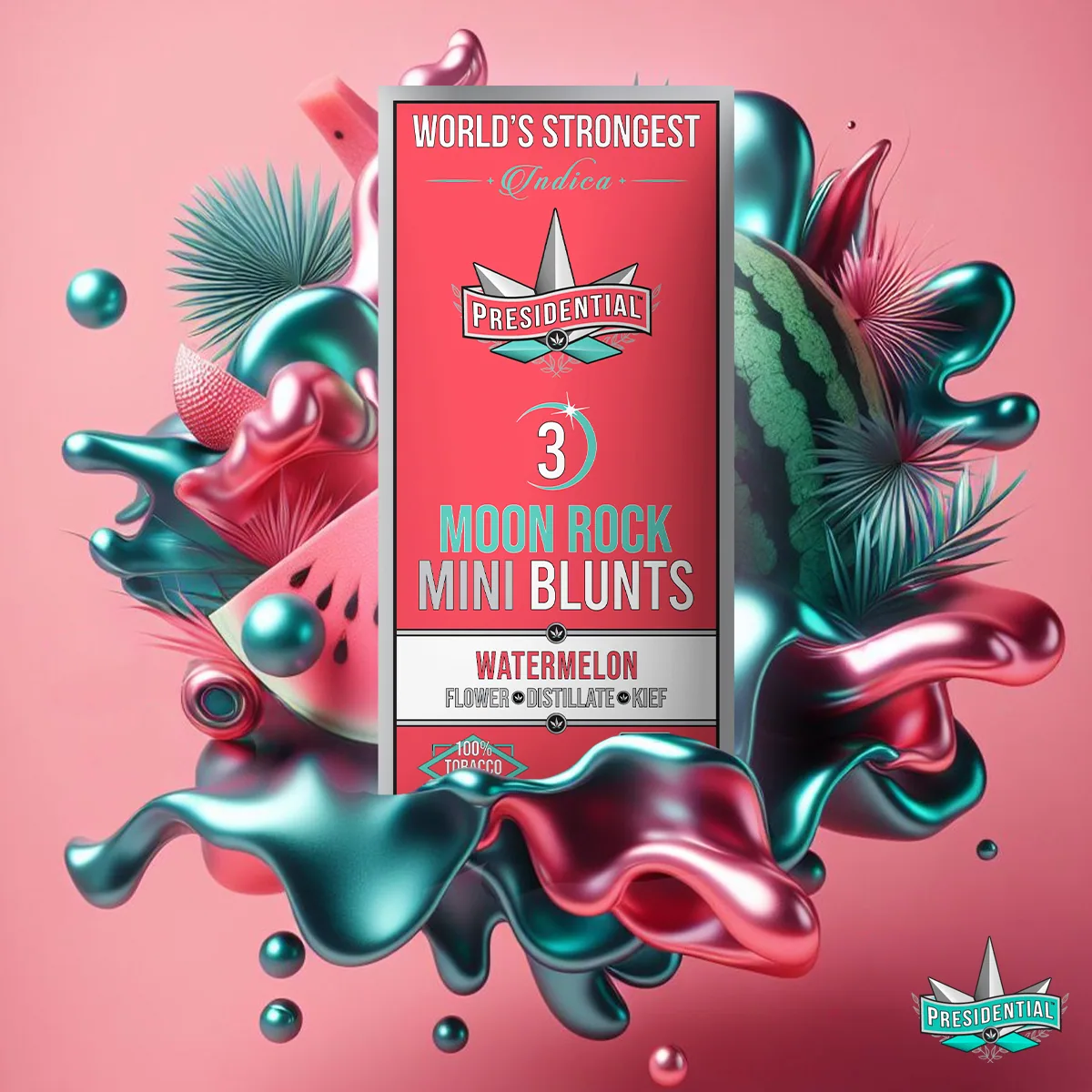
A wrap can bring its own taste or remain neutral. Traditional tobacco leaf carries a tobacco character along with nicotine. Hemp gives Presidential a tobacco-free, neutral outer layer. The distinction reaches every draw because the wrap is present around the full length of the material.
Neutrality is an active design choice. It creates space for the flower, concentrate, kief or diamond finish, and selected flavour profile to remain recognizable as the contents of the blunt. This matters across Presidential's series, because each pack prints its own extract. The same neutral wrap lets each interior construction keep its own identity.
Look for wrap material, series name, and extract type in the same pass, along with any batch or lot identifiers the market requires. Those fields describe construction and aroma intent. They do not authorize medical promises. When hemp wrap and a named series appear together, the package is saying the outer layer stays quiet so the flower, concentrate, kief or diamond finish, and series profile can remain recognizable from the first draw to the last.
How is a hemp wrap made?
Our wraps start with hemp as the material source. Manufacturing turns it into a continuous sheet, giving the finished piece one unbroken boundary around the fill. The formed material then reaches a useful thickness and size, which is what separates a blunt wrap from pre-roll paper: it surrounds more material, burns slower, and holds heat longer. A consistent finished piece supports the shape of the roll and keeps the contents organized. Keep reading with how wraps are made, tobacco-free blunt wraps, or hemp wrap vs paper. If you're wondering whether our wraps are sold on their own, the hemp vs tobacco wrap guide answers it: each wrap comes only as the outer sheet of a finished infused blunt.
One component shapes the whole format
The wrap's jobs converge during a session. Its shape holds the three layers, its boundary guides airflow, its thickness contributes to the slow burn, and its neutrality keeps the taste centered on the material. None of those roles needs to compete with the others; a well-matched wrap performs them together.
That combination explains why wrap choice changes more than appearance. It determines how the roll is organized, how air and heat move, how quickly the contents advance, and whether the outer layer adds a separate taste. In a Presidential blunt, hemp makes those decisions consistent across full-size blunts and minis, with the smaller format carrying the same basic construction at a smaller size.
A simple way to read any wrap is to ask four questions in order. Does it keep the filling in one stable roll? Does it give air a consistent route? Does its thickness match the intended pace? Does its material support the flavour direction? Those questions translate an outer sheet into the practical experience of the format. For Presidential, hemp answers them with blunt-scale structure, a slow-burning boundary, and a neutral taste role around the infused interior.
Solving those questions in order also keeps a licensed shelf readable when packaging looks related at a glance. Identify the outer material first, then format scale, then series direction inside the shared wrap. A mini and a full-size blunt can share the same hemp jobs at different lengths; Silver, Gold, and Rose Gold can share the same neutral frame while differing by extract. The wrap stays one component with four jobs.
When one job slips, the other three move
The four jobs share one sheet, so a fault does not stay in the job where it first shows. A soft spot, a pinched seam, or an abrupt change in gauge leaves one side of the roll less supported. That is the structure problem already named here, and the airflow reading of the same fault is a shortcut: air and heat take the easier side, and one side of the edge runs ahead. The slower pace of a thicker blunt wrap then describes only part of the roll, even while that wrap still surrounds a larger volume than a pre-roll and still holds heat in the active portion. Taste depends on the same boundary. The wrap is present for the full length of the material, and a neutral hemp layer keeps flower, concentrate, and a kief or diamond finish recognizable only while the draw is still moving through the arranged fill rather than through a shortcut.
The same link is why a wrap change is not a flavour-only edit. A neutral hemp wrap leaves the structural and burn roles in place so the flower, concentrate, and a kief or diamond finish define taste. Silver, Gold, and Rose Gold can share that frame and still differ by the extract each pack prints. A wrap that brings its own taste still has to hold the roll, bound the air path, and take part in the pace. On a licensed label, hemp wrap, blunt wrap, and paper are different expectations for how the outer sheet will contain the fill, and they are read before format scale or series direction. A mini and a full-size blunt can share those hemp jobs at different lengths. The reading stays a construction checklist for adults 21+. It is not a medical claim or dosing advice.