The tobacco leaf tradition
The traditional blunt begins with tobacco leaf. A cigar or cigarillo is emptied and then refilled, preserving the tobacco outer layer while changing the material inside it. That origin is the reason tobacco taste and nicotine belong to the traditional format. They come from the wrap itself, not from the flower placed within it.
Tobacco leaf therefore participates in the flavour from the first light through the full roll. The contents and the outer layer meet in every draw, producing a combined profile. For readers comparing wrap styles, this is the clearest starting point: a tobacco wrap is not simply a neutral container. It is one of the ingredients shaping the finished taste.
Compare the finished blunt format with infused flower in the broader product guide.
Connect hemp wrap material with the anatomy of cannabis flower.
The hemp wrap tradition
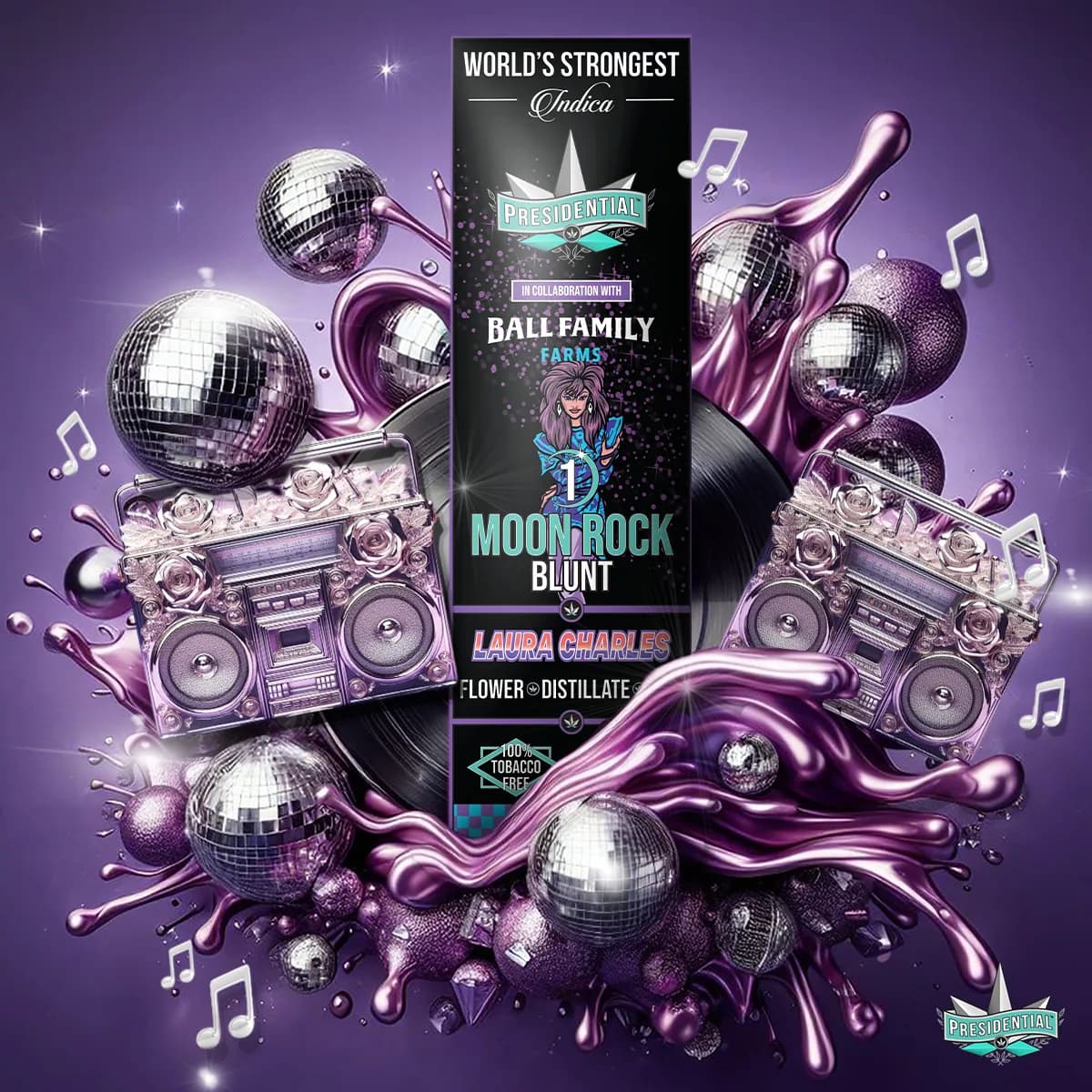
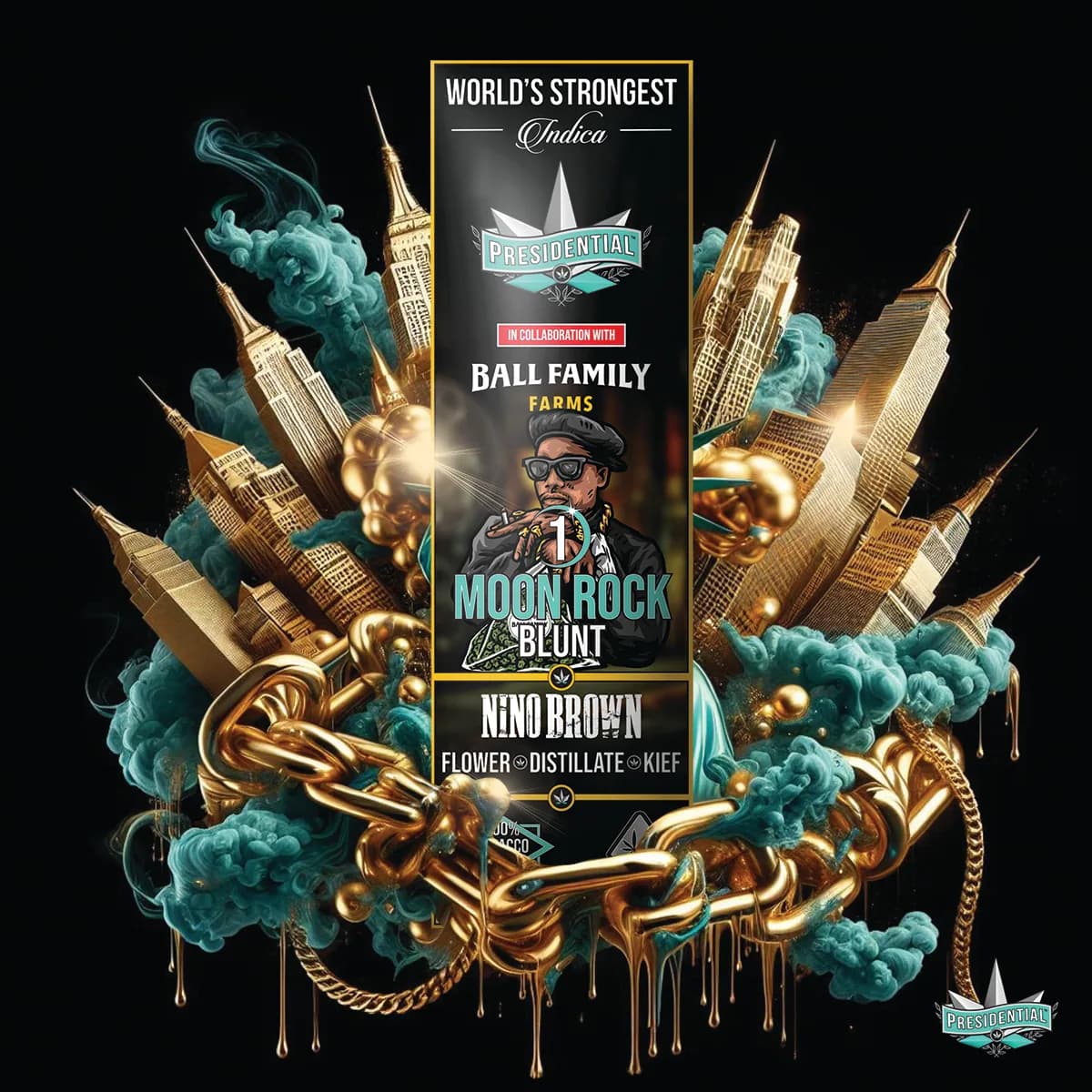
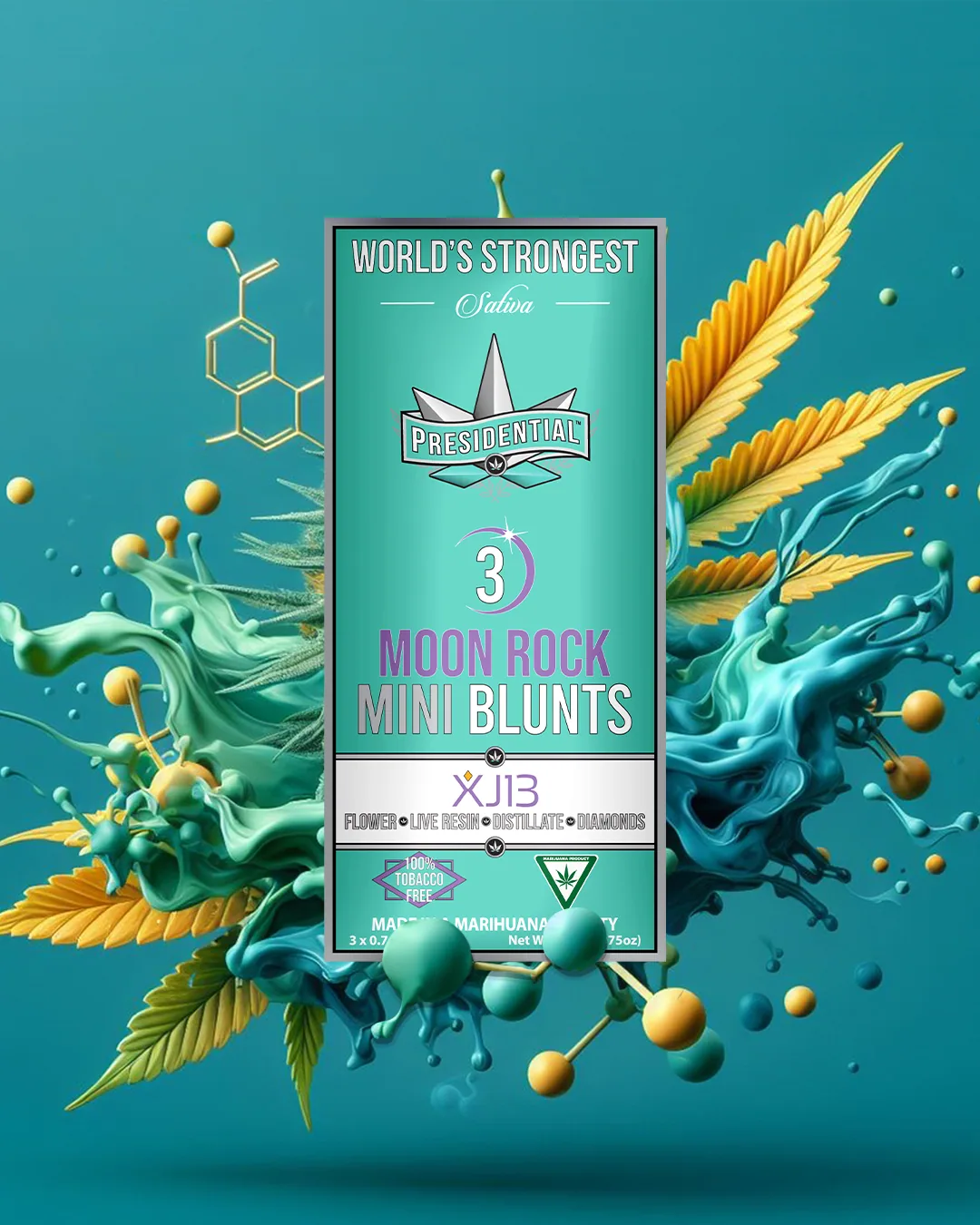
A hemp blunt wrap creates the same broad format around a different material choice. It holds more material than the thin paper used for a pre-roll, supports a slow burn, and retains heat, while keeping tobacco outside the construction. Presidential's use of hemp makes every blunt in the catalog one hundred percent tobacco free.
Hemp's neutral character changes the relationship between the outer layer and the filling. Rather than adding tobacco taste, the wrap gives the inner construction room to lead. Flower provides the base, concentrate is carried through that flower, and kief is added last. Those three layers remain the main sources of the blunt's identity.
Taste reveals the central difference
The taste comparison follows directly from the materials. Tobacco leaf adds its own recognizable character. Neutral hemp acts as a clearer window onto the ingredients inside the roll. Wrap choice therefore determines whether the palate receives a combined tobacco-and-filling profile or a profile led by the filling itself.
That neutrality has particular value across a catalog built with different extracts and flavour directions. Distillate is refined to a near-neutral aroma and supports the deliberately fruit-forward Silver Flavor Series. Live resin gives the Gold Strain Series a cannabis-forward foundation. Solventless live rosin sits at the center of the Rose Gold Connoisseur Series. A neutral hemp wrap gives each of those directions the same clear outer setting.
Burn and heat belong to the full construction
Both wrap traditions sit within the blunt family, which uses a thicker outer layer than a pre-roll and carries more material. That structure burns slower and holds heat longer than thin rolling paper. The exact session is shaped by the wrap, the amount and density of the contents, the distribution of concentrate, and the airflow through the finished roll.
For an infused Presidential blunt, concentrate adds density and retains heat. Even distribution supports an even burn, and the wrap provides the continuous structure around it. The material takes time to catch, so rotating the end in the flame lets the roll establish a balanced light. A later relight fits the same dense, slow-burning construction.
The choice defines the finished character
A useful comparison asks what role the outer layer should play. Tobacco leaf makes itself part of the flavour and brings nicotine through the wrap. Hemp delivers the blunt's thicker, slower format with a tobacco-free, neutral surface. The decision is therefore visible in the product's identity as well as in its material list.
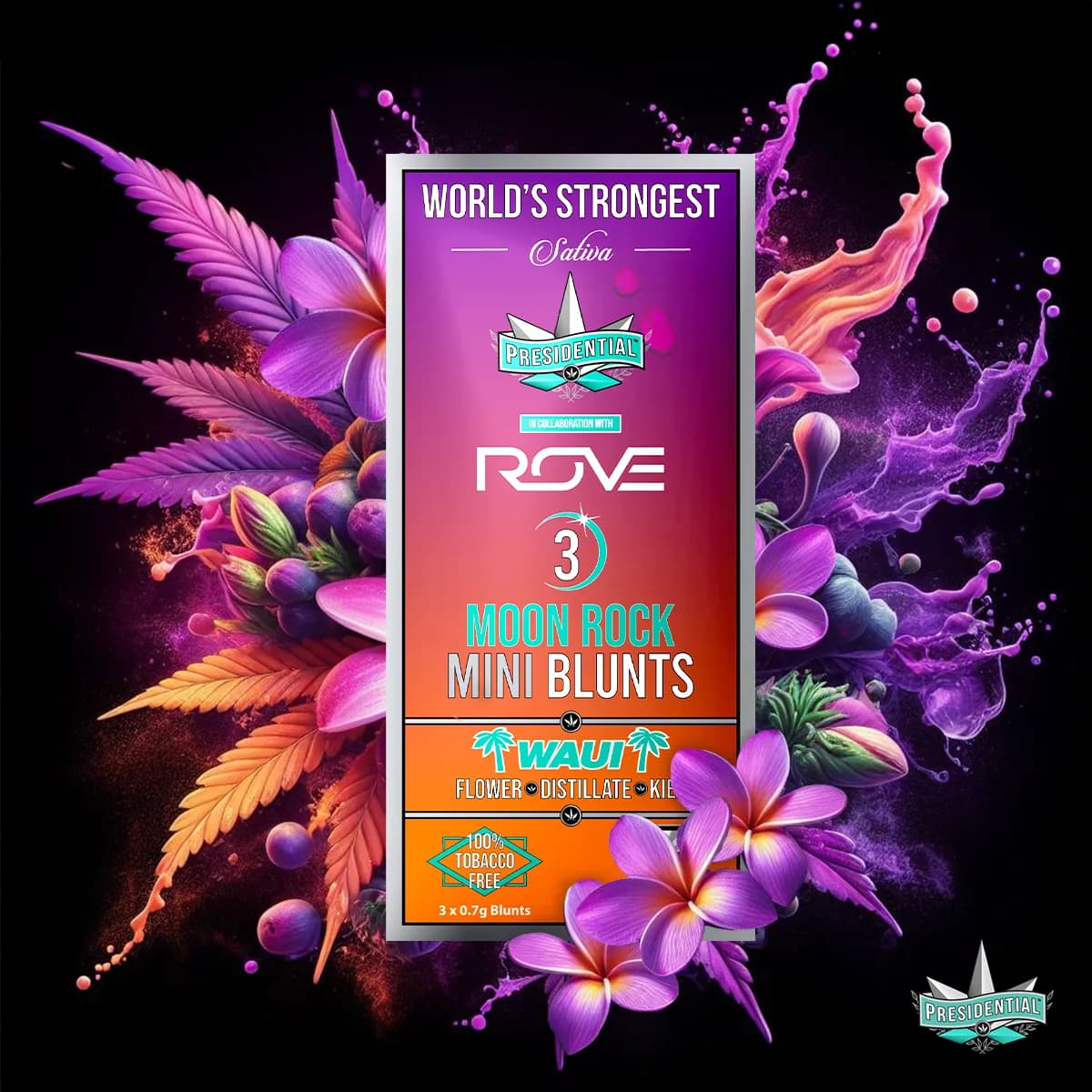
Presidential's answer is consistent: hemp surrounds the three-layer infused construction across the catalog. Full-size blunts and minis share that approach, with a mini carrying the same construction at a smaller size. The result is a clear family resemblance from one format to another—hemp at the surface, flower, concentrate, and kief inside, and the selected series profile at the center of the taste.
The comparison becomes especially useful when language around blunts feels broad. Start with the wrap material, then follow what that material adds. Tobacco leaf identifies the nicotine-carrying, tobacco-flavoured tradition. Hemp identifies Presidential's tobacco-free, neutral approach. From there, size, infusion, and series can be considered on their own terms. That sequence keeps the wrap decision distinct from the contents and shows how a familiar blunt structure can support a clearly different finished character.